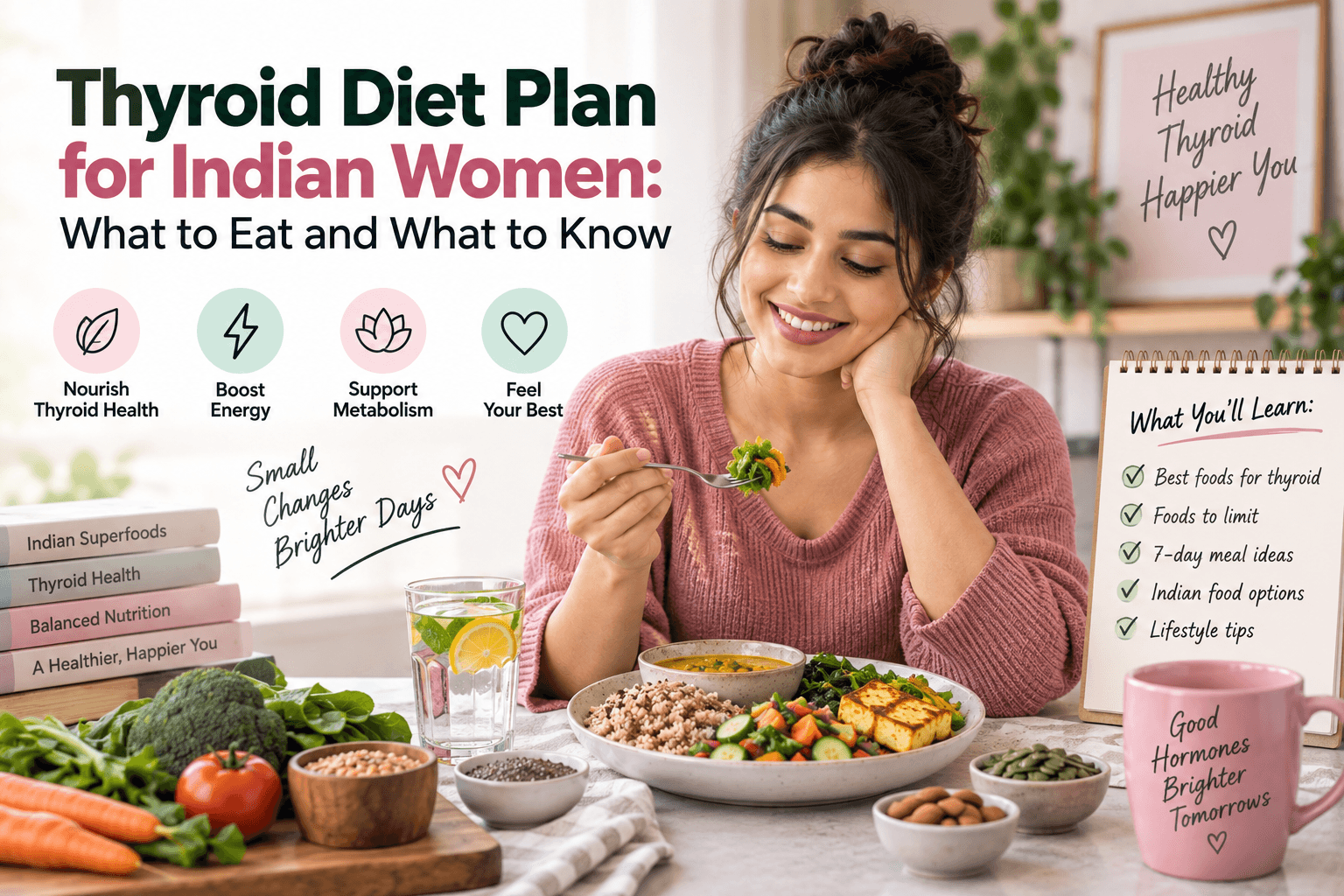
Thyroid Diet Plan for Indian Women: What to Eat and What to Know
If you have hypothyroidism, it is easy to find lists telling you to stop eating cabbage, soy, gluten, rice or dairy. Most people do not need a long forbidden-food list. They need the right diagnosis and treatment, regular follow-up, and an eating pattern they can maintain.
There is no special diet that replaces thyroid medicine. Food can support overall health, energy and weight management, but it cannot reliably "boost" an underactive thyroid back to normal.
This guide is general education. Your needs may differ if you are pregnant, trying to conceive, have diabetes, kidney disease, anaemia, coeliac disease, take levothyroxine or other medicines, or have been advised to follow a low-iodine diet for a medical procedure.
What is hypothyroidism?
Hypothyroidism means the thyroid gland does not make enough thyroid hormone. Common symptoms can include tiredness, feeling cold, constipation, dry skin, changes in periods and weight gain, but these symptoms also have other causes. A blood test and clinical assessment are needed.
Treatment often includes levothyroxine. The American Thyroid Association notes that the correct dose and regular monitoring matter. Do not change or stop medication because of a diet or supplement claim.
Is there one best thyroid diet?
No. The British Thyroid Foundation says there is no specific thyroid diet and no single food or supplement that treats a thyroid disorder.
A practical pattern includes:
- vegetables and fruit across the week;
- enough protein from dal, beans, soy, dairy, eggs, fish or lean meat;
- familiar carbohydrates in portions that suit your needs;
- mostly home-cooked or minimally processed meals;
- regular meals if long gaps lead to overeating or low energy;
- medicine timing that follows your prescriber's instructions.
A simple Indian plate
For lunch and dinner, try:
- Half: sabzi, cooked vegetables or salad.
- One quarter: dal, chana, rajma, tofu, paneer, curd, eggs, chicken or fish.
- One quarter: roti, rice, millet, potato or another carbohydrate.
- A small amount of fat: cooking oil, nuts or seeds.
This is a starting point, not a prescription. Your appetite, activity, body size and health conditions affect portions.
Seven-day sample menu
| Day | Breakfast | Lunch | Snack | Dinner |
|---|---|---|---|---|
| 1 | Vegetable besan chilla + curd | Roti + dal + bhindi + salad | Fruit + peanuts | Paneer/tofu bhurji + vegetables + roti |
| 2 | Poha with peas + egg/sprouts | Rice + rajma + salad | Chaas + roasted chana | Fish/chicken/soy curry + vegetables |
| 3 | Oats with milk/soy milk, fruit and nuts | Roti + chana + seasonal sabzi | Curd + fruit | Moong dal khichdi with vegetables |
| 4 | Idli + sambar | Vegetable pulao + raita | Makhana or peanuts | Egg/tofu curry + roti + salad |
| 5 | Upma + curd | Rice + dal + mixed vegetables | Guava/orange + nuts | Chicken/paneer tikka + vegetables + roti |
| 6 | Vegetable omelette or tofu scramble + toast | Roti + kala chana + lauki | Buttermilk + roasted chana | Dal soup + sabzi + rice/roti |
| 7 | Dosa + sambar | Home-style biryani + raita + salad | Fruit | Light khichdi + curd + vegetables |
Adjust ingredients for allergies, preferences and clinician advice.
Do you need to avoid these foods?
Cabbage, cauliflower and broccoli
These nutritious vegetables usually do not need to be removed from a varied diet. Very large amounts of certain foods may matter in specific contexts, but ordinary cooked servings are different from concentrated supplements. Ask your clinician if you have a specific iodine concern.
Soy
Soy can be a useful protein source. The important issue for some people is medicine absorption and timing, not a blanket ban. Follow the instructions for your medicine and ask your pharmacist how far to separate it from food or supplements.
Gluten
A gluten-free diet is medically necessary for coeliac disease. It is not an automatic thyroid treatment. Testing should be discussed before removing gluten because dietary restriction can affect results and make eating harder.
Dairy
Dairy can fit unless you are allergic, intolerant or need to separate calcium-rich foods/supplements from your medicine.
Levothyroxine and food timing
Food, calcium, iron and some medicines can affect levothyroxine absorption. Instructions differ by product and person. Take it consistently exactly as prescribed and ask your doctor or pharmacist:
- Should I take it before breakfast or at bedtime?
- How long should I wait before eating?
- How far should I separate iron or calcium supplements?
- Do coffee, soy or high-fibre meals affect my schedule?
- When should my thyroid blood test be repeated?
Do not invent your own timing from a social-media post.
Iodine and supplements
The thyroid needs iodine, but too little and too much can both cause problems. Do not start iodine or kelp supplements unless a qualified clinician recommends them. "Thyroid support" products may contain high doses or undisclosed ingredients.
Selenium, vitamin D, B12 or iron should not be taken in high doses just because they appear in a thyroid checklist. Test and treat a real deficiency with professional guidance.
Weight management with hypothyroidism
The American Thyroid Association explains that hypothyroidism can contribute to some weight gain, much of which may involve salt and water retention. Once thyroid levels are treated appropriately, weight management still depends on the wider picture.
Start with:
- protein at each main meal;
- vegetables at lunch and dinner;
- fewer sugary drinks and routine bakery snacks;
- movement you can repeat;
- sleep and medicine consistency;
- realistic tracking over weeks, not daily panic.
Avoid programs promising rapid weight loss or thyroid reversal.
When to seek medical advice
Speak to a clinician if symptoms persist, your periods change significantly, you are pregnant or planning pregnancy, you have chest symptoms or severe weakness, or you have started/stopped medicines or supplements. Thyroid medicine often needs closer monitoring during pregnancy.
For help building routines around your diagnosed condition, book a free first HobFit consultation. HobFit support should complement, not replace, your medical care.
Frequently asked questions
Can thyroid be cured with diet?
No diet can promise to cure hypothyroidism. Appropriate diagnosis, medicine when prescribed, monitoring and healthy routines work together.
Should I stop eating cabbage or cauliflower?
Most people do not need to avoid ordinary servings. Ask your clinician if you have a specific iodine or treatment-related reason.
Can I drink coffee after thyroid medicine?
Coffee may affect absorption for some levothyroxine products. Follow your prescription and ask your pharmacist about timing.
Do I need iodine supplements?
Not unless a qualified clinician identifies a need. Excess iodine can also harm thyroid function.
Why am I not losing weight after starting treatment?
Thyroid treatment corrects hormone deficiency; it is not a weight-loss drug. Dose, other health conditions, food, activity, sleep and medicines can all matter. Review persistent concerns with your care team.
Sources
- American Thyroid Association - Hypothyroidism: https://www.thyroid.org/hypothyroidism/
- American Thyroid Association - Thyroid and Weight: https://www.thyroid.org/thyroid-and-weight/
- British Thyroid Foundation - Diets and supplements: https://www.btf-thyroid.org/diets-and-supplements-for-thyroid-disorders
- ICMR-NIN Dietary Guidelines for Indians 2024: https://nin.res.in/dietaryguidelines/pdfjs/locale/DGI_2024.pdf
