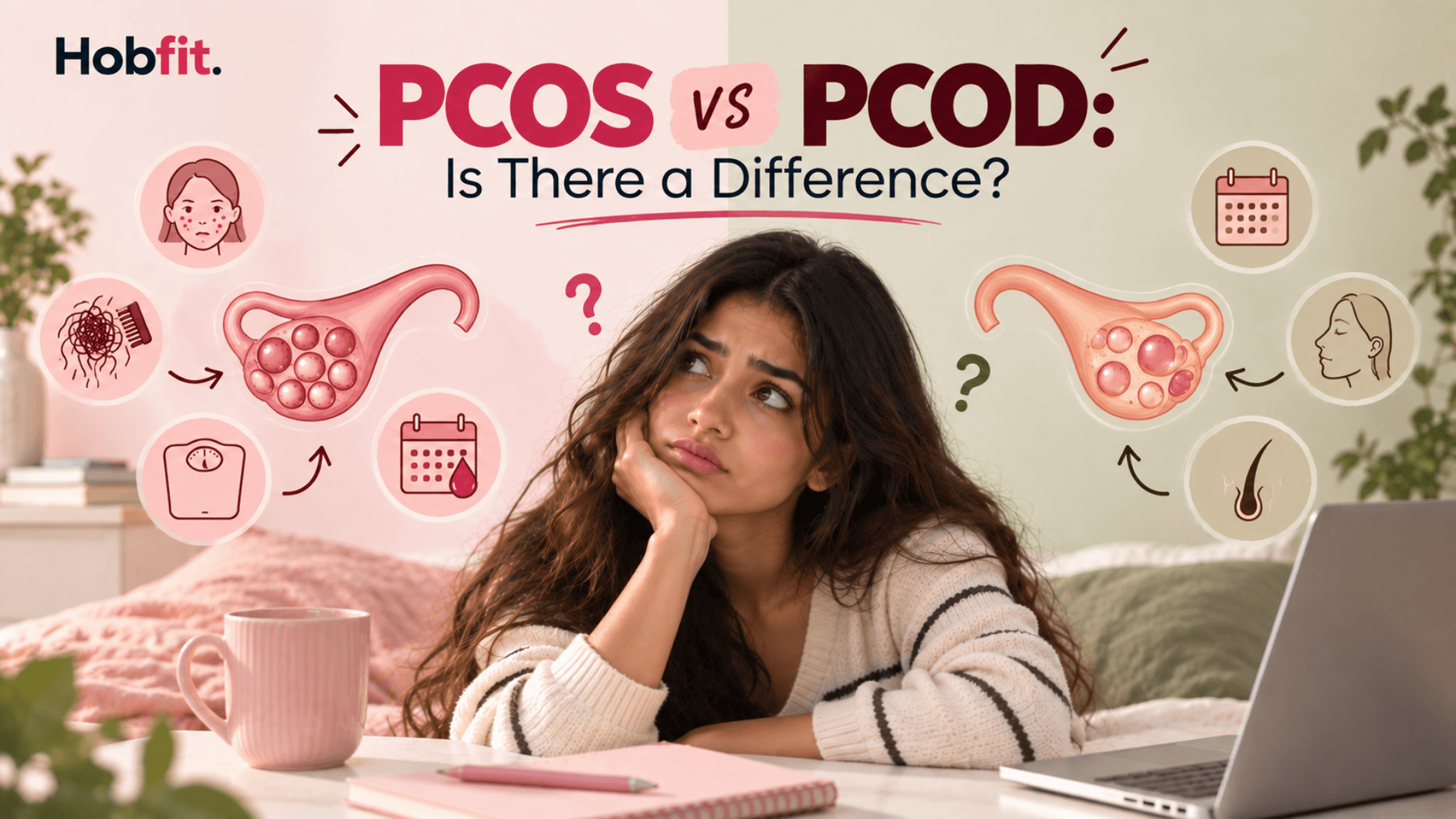
PCOS vs PCOD: Is There a Difference?
In India, "PCOS" and "PCOD" are often used as if they mean different conditions. You may hear that one is more serious, one affects hormones, or one can be cured by weight loss. Those simple comparisons are usually misleading.
PCOS, short for polycystic ovary syndrome, is the term used in major international medical guidelines and by organizations such as WHO and ACOG. PCOD, often expanded as polycystic ovarian disease, is a term still commonly used in India, but it does not have a separate standard diagnostic definition in those guidelines.
If a report or clinician says PCOD, ask what findings and diagnostic criteria they mean. The label matters less than a proper assessment and a plan for your symptoms and long-term health.
Why are both terms used?
Language changes slowly. PCOD became common in clinics, media and online searches in India. PCOS is the internationally recognized guideline term. Many people use PCOD to describe the same symptom pattern or a perceived "milder" version, but severity should not be decided from the acronym.
Avoid charts claiming:
- PCOD affects only ovaries while PCOS affects the whole body;
- PCOD is common and harmless while PCOS is severe;
- one can be cured and the other cannot;
- ultrasound alone separates them.
Those claims oversimplify a condition that varies between individuals.
What symptoms are associated with PCOS?
Possible features include:
- irregular, infrequent or absent periods;
- acne or oily skin;
- increased facial/body hair;
- scalp hair thinning;
- difficulty conceiving because of irregular ovulation;
- metabolic concerns such as insulin resistance;
- darkened skin patches;
- mood, sleep or body-image distress.
Not everyone has every symptom. PCOS can affect women across body sizes. HobFit's guide to PCOS symptoms in women covers these signs in more depth.
Does having ovarian cysts mean PCOS?
Not necessarily. Despite the name, PCOS is not simply a disease of ovarian cysts. Ultrasound can show many small follicles, but similar findings can occur without PCOS. Some people with PCOS may not need an ultrasound for diagnosis, depending on their clinical features and age.
A report should be interpreted by a qualified clinician, not matched to an image search.
How is PCOS diagnosed?
A clinician considers cycle/ovulation patterns, signs or blood-test evidence of higher androgen activity, and ovarian findings where appropriate. Other causes of similar symptoms should be excluded.
Assessment may involve:
- menstrual and symptom history;
- pregnancy possibility;
- medicines and family history;
- examination;
- selected blood tests;
- ultrasound in some cases.
The exact approach differs for adolescents and adults. Diagnosis should not come from a quiz or one isolated result.
Is PCOS more serious than PCOD?
Because PCOD does not have one accepted separate definition, this comparison is not reliable. Ask instead:
- How often are my periods coming?
- Am I ovulating?
- Do I have androgen-related symptoms?
- Are my blood sugar, blood pressure and cholesterol healthy?
- Is fertility a current concern?
- Are symptoms affecting my mood or quality of life?
Those questions guide care better than arguing over the acronym.
Can PCOS or PCOD be cured?
Avoid cure promises. PCOS symptoms and health risks can be managed through individualized care. Depending on the person's goals, care may include healthy eating, activity, medicines, fertility treatment, skin/hair treatment and mental-health support.
Lifestyle care is not a punishment and does not mean the condition is your fault.
What should you do if a report says PCOD?
- Ask which diagnostic criteria were met.
- Ask whether other causes were checked.
- Discuss your main concerns: periods, hair/skin, fertility, metabolic health or mood.
- Ask what follow-up and screening you need.
- Be careful with supplements or plans promising reversal in a fixed number of days.
For practical routine support after assessment, explore HobFit's PCOS program overview, Indian PCOS diet guide and PCOS exercise guide.
Frequently asked questions
Which is worse, PCOS or PCOD?
There is no reliable severity ranking because PCOD is not a separately standardized diagnosis in major international guidelines. Individual symptoms and health findings determine risk and care.
Are PCOS and PCOD the same?
They are commonly used for the same condition in India. PCOS is the standard term in international guidance. Ask your clinician what the label means in your case.
Can PCOD become PCOS?
That idea assumes two defined stages, which major guidelines do not establish. Symptoms can change over time, so follow-up matters.
Does PCOS always show on ultrasound?
No. Diagnosis considers more than ultrasound, and ultrasound is not required in every situation.
Can someone with regular periods have PCOS?
Some people may report regular-looking cycles but have other features. A clinician should assess the full picture.
If you want help building routines around a confirmed diagnosis, book a free first HobFit consultation. This does not replace diagnosis or treatment.
Sources
- WHO - Polycystic ovary syndrome:
https://www.who.int/news-room/fact-sheets/detail/polycystic-ovary-syndrome - 2023 International Evidence-based PCOS Guideline:
https://www.asrm.org/practice-guidance/practice-committee-documents/recommendations-from-the-2023-international-evidence-based-guideline-for-the-assessment-and-management-of-polycystic-ovary-syndrome/ - ACOG - PCOS FAQ:
https://www.acog.org/womens-health/faqs/polycystic-ovary-syndrome-pcos
