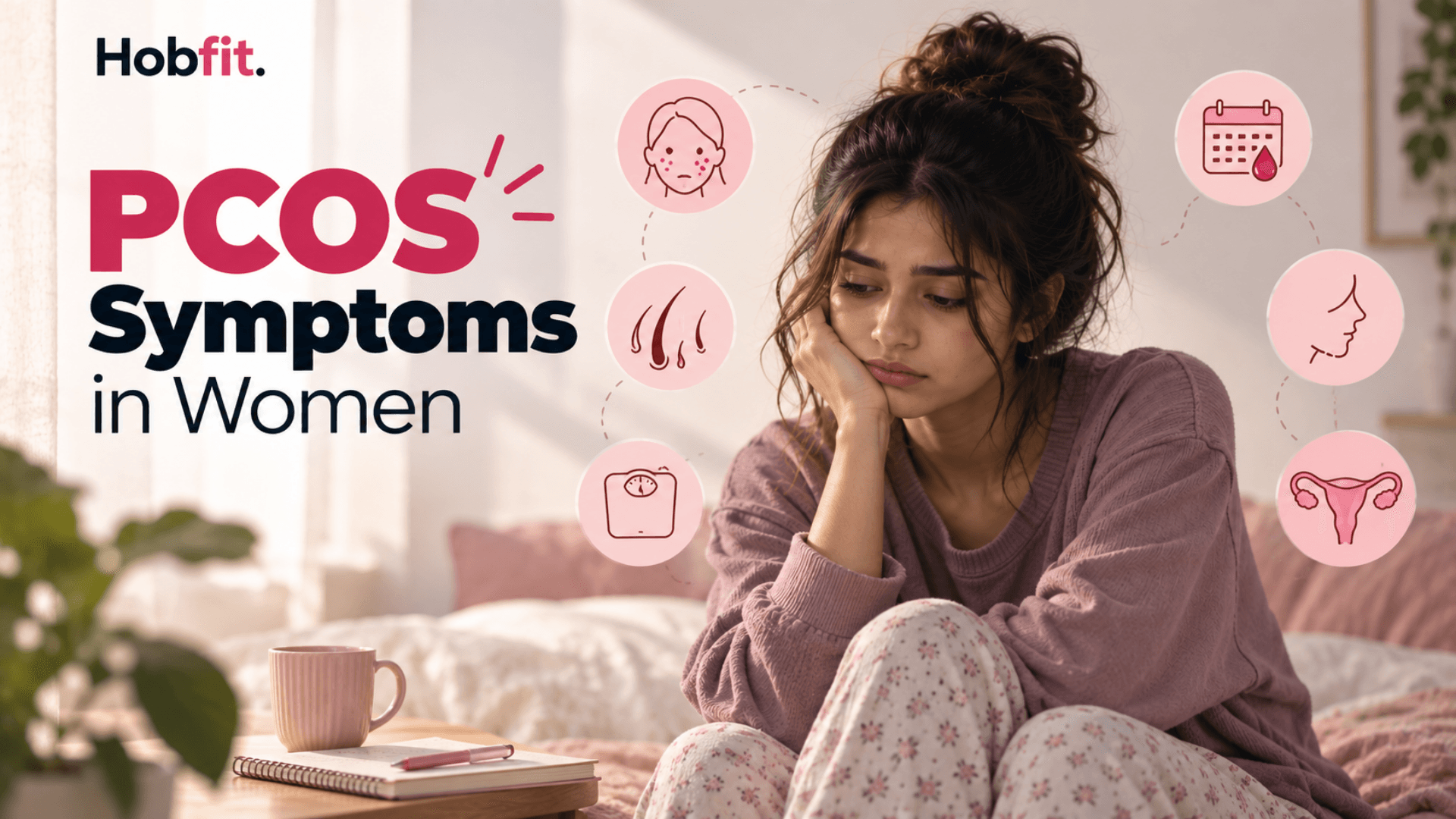
PCOS Symptoms in Women: What to Notice and How Diagnosis Works
PCOS can look different from one woman to another. One person may notice irregular periods and acne. Another may have increased facial hair or trouble conceiving. Some symptoms overlap with thyroid problems, pregnancy, stress and other health conditions, so a symptom list cannot diagnose PCOS.
PCOS stands for polycystic ovary syndrome. In India, people also commonly use "PCOD," but a clinician should explain the diagnosis rather than relying on the label used online.
Common PCOS symptoms
Irregular, infrequent or absent periods
PCOS can affect ovulation. Periods may come far apart, change unpredictably or stop for months. Repeatedly irregular periods deserve medical assessment because there are several possible causes.
Increased facial or body hair
Higher androgen activity can cause coarse hair on the face, chest, abdomen or back. Hair patterns vary with genetics and background.
Acne or oily skin
Persistent acne, especially with irregular periods or increased hair growth, can be part of the picture. Acne alone does not mean PCOS.
Scalp hair thinning
Some women notice widening of the part or thinning near the crown. Iron deficiency, thyroid problems, stress and other conditions can also cause hair loss.
Difficulty conceiving
Irregular ovulation can make conception harder, but PCOS does not mean pregnancy is impossible. A qualified clinician can discuss fertility assessment and treatment.
Weight gain or difficulty managing weight
PCOS can be associated with insulin resistance and weight concerns. However, PCOS occurs in women of different body sizes. Weight should never be used as the only reason to diagnose or dismiss it.
Darkened or thickened skin patches
Some people develop darker, velvety skin around the neck, underarms or other folds. This can be associated with insulin resistance and should be discussed with a clinician.
Mood, sleep and quality-of-life changes
The 2023 international guideline recognizes that PCOS can affect emotional wellbeing. Anxiety, low mood, body-image distress and sleep problems deserve support, not dismissal.
What PCOS is not
- It is not confirmed by acne alone.
- It is not ruled out because someone is thin.
- It is not simply "cysts on the ovaries."
- It is not diagnosed from an ultrasound alone in every case.
- It is not your fault.
How doctors assess PCOS
A clinician may ask about cycle history, hair/skin changes, medicines, pregnancy possibility and family history. Assessment can include an examination and blood tests. Ultrasound may be used in some situations, but the exact approach depends on age and circumstances.
The 2023 international evidence-based guideline says other causes of similar symptoms should be excluded. Diagnosis should not come from a social-media checklist or one isolated test.
Conditions that can look similar
Irregular periods, acne or hair changes can also occur with:
- pregnancy;
- thyroid disorders;
- high prolactin;
- changes in food intake, weight or exercise;
- some medicines;
- perimenopause;
- other hormonal conditions.
This is why proper assessment matters.
When should you book an appointment?
Speak to a doctor or gynaecologist if:
- periods are repeatedly irregular or absent for about three months and pregnancy is not the cause;
- you have new or rapidly increasing facial/body hair;
- acne or scalp hair loss is persistent and troubling;
- you are trying to conceive;
- you have symptoms of high blood sugar;
- symptoms affect your mood or daily life.
Seek urgent care for severe pain, fainting, very heavy bleeding, or possible pregnancy with one-sided pain or bleeding.
What you can track before the appointment
Record:
- first and last day of each period;
- bleeding amount and pain;
- acne and hair changes;
- medicines and supplements;
- sleep and mood;
- recent weight, food or exercise changes;
- pregnancy-test results if relevant.
A tracker can organize information but cannot diagnose PCOS.
What helps after diagnosis?
PCOS care depends on your main concerns: periods, skin/hair symptoms, fertility, metabolic health or wellbeing. Treatment may include lifestyle support, medicine and specialist care.
The international guideline supports healthy eating and physical activity for all women with PCOS, including benefits that can occur without weight loss. Avoid programs promising a cure.
Read HobFit's practical Indian PCOS diet guide and PCOS support overview. These resources should complement medical care.
Frequently asked questions
Is PCOS the same as PCOD?
The terms are often used interchangeably in India, but PCOS is the internationally used medical term. Ask your clinician what diagnosis and criteria apply to you.
Can you have PCOS with regular periods?
Some women with PCOS may report regular-looking cycles, while others have clear irregularity. Diagnosis considers the wider clinical picture.
Does an ultrasound confirm PCOS?
Not by itself in every case. Ultrasound findings can occur without PCOS, and diagnosis uses defined criteria and exclusion of other causes.
Can PCOS be cured?
There is no honest one-step cure. Symptoms and long-term risks can be managed with individualized care.
Does PCOS always cause weight gain?
No. PCOS affects women across body sizes. Weight is one possible concern, not a requirement.
If you want help organizing your routine after a diagnosis, book a free first HobFit consultation. HobFit does not replace diagnosis or treatment by a clinician.
Sources
- WHO - Polycystic ovary syndrome: https://www.who.int/news-room/fact-sheets/detail/polycystic-ovary-syndrome
- 2023 International Evidence-based PCOS Guideline: https://www.asrm.org/practice-guidance/practice-committee-documents/recommendations-from-the-2023-international-evidence-based-guideline-for-the-assessment-and-management-of-polycystic-ovary-syndrome/
- ACOG - PCOS FAQ: https://www.acog.org/womens-health/faqs/polycystic-ovary-syndrome-pcos
